The God is great God is good prayer is a familiar mealtime blessing that teaches children and families to thank God for His goodness. Passed down through generations, this simple prayer reminds us to appreciate the food we eat and the blessings we receive each day.
Although its words are easy to remember, the prayer carries a deeper message about faith, gratitude, and God’s care. It encourages believers to pause before meals and recognize the source of their daily blessings.
In this guide, you’ll discover the full prayer, its history, the meaning behind each line, and its connection to biblical teachings. You’ll also learn how to share this timeless tradition with your children and family.
The full words of the prayer
The most common version is short enough for a toddler to learn in one evening:
God is great, God is good,
Let us thank Him for our food.
Amen.
Families tweak it in a few familiar ways:
- “And we thank Him for our food” replaces “Let us thank Him.” This version is common in homes and classrooms.
- A longer version adds two lines: “By His hands we all are fed, give us Lord our daily bread. Amen.”
- A sung version repeats the lines to a simple tune. Many Sunday schools and preschools use it, and young children often take to it quickly.
Every version keeps the same two-part core: God is great, and God is good. Everything else is an optional extra.
Where the prayer came from
Nobody can name the author or the year. No hymnal, church record or publisher has been shown to be the original source, and any website claiming a confident founder is guessing.
What we do know is how it spread. It traveled by word of mouth through Sunday schools, church nurseries, Christian preschools and family kitchens, mostly in English-speaking countries. Each generation taught it to the next without needing a book.
Its rhythm explains the longevity. The lines rhyme, they are short, and the beat is easy to clap. A three-year-old can recite it, and a grandparent can say it with the same words they learned decades ago.
Line by line: what the words actually mean
Each line carries more than it first seems to.
| Line | What it says |
| God is great | God is bigger than anything we face. He is powerful, ruling over all creation and above every problem. |
| God is good | His power is not cold or distant. He is kind, generous and caring toward the people He made. |
| Let us thank Him | Gratitude is something we do together. “Us” pulls everyone at the table into the same moment. |
| For our food | We name a specific, ordinary gift. The meal in front of us becomes a reminder that we depend on Him daily. |
| Amen | A word meaning “so be it.” It seals the prayer with agreement. |
Notice the order. Greatness comes first, so we remember who we are talking to. Goodness comes second, so we remember He is not just powerful but personal. Only then do we move to thanks. Many longer prayers follow that same pattern.
What Is the Biblical Meaning of God Is Great, God Is Good Prayer?
The exact words do not appear in the Bible. The ideas behind them appear throughout it.Scripture pairs God’s greatness with His goodness again and again.
Psalm 145 opens with praise for how great the Lord is, then quickly describes how kind He is to everything He has made. The psalmist never treats the two as rivals.
The thanks for food is biblical too. Jesus taught His followers to ask for daily bread, and He gave thanks before meals Himself, including before feeding the crowds. A simple prayer like this one carries that habit forward in a form a small child can manage.
So the God is great God is good prayer is a children’s summary of a theme running from the Psalms to the Gospels. It is not a quotation, but it stays faithful to the text.
Don’t Miss: Have a Blessed Weekend: 55+ Wishes & Quotes to Share
When Should You Say God Is Great, God Is Good Prayer?
Mealtime is the natural home for it, but the situations are wider than that:
- Before breakfast, lunch or dinner at home
- At school or daycare where children eat together
- At holiday tables such as Thanksgiving and Christmas
- Over potlucks and church suppers, where one line is easy for a crowd to say together
- In restaurants, where a quiet, quick version still works
- On road trips and picnics, when the routine of the home table is missing
You can also say it away from food entirely. On a hard day, “God is great, God is good” works as a short reminder that He is both powerful and kind, which is often what a worried person needs to hear.
What Bible Verses Support the Message of This Prayer?
These passages back up each part of the prayer:
- Deuteronomy 10:17 calls the Lord the great, mighty and awesome God, above all other powers.
- Psalm 145:3 says the Lord is great and highly worthy of praise, and that His greatness cannot be fully measured.
- Psalm 34:8 invites us to taste and see that the Lord is good, and blesses the person who trusts in Him.
- Psalm 100:5 says the Lord is good and His love lasts forever.
- Psalm 136:25 praises the God who gives food to every living creature.
- Matthew 6:11 records Jesus teaching us to ask for our daily bread.
- 1 Timothy 4:4–5 teaches that food received with thanksgiving is good and made holy by prayer.
If you read one passage with your children, make it Psalm 145. It holds both halves of the prayer in a single chapter.
How Can Parents Teach Children the God Is Great, God Is Good Prayer?
Children learn prayers by repetition, not by explanation, so start simple.
- Say it the same way every time. Consistency does more than any lesson plan. After a week, most toddlers will join in.
- Add motions. Fold hands on “God is great,” then open them wide on “God is good.”
- Explain one line a day. Over dinner, ask, “What is something big that God made?” and “What is something good He gave us today?”
- Let the child lead. Once they know the words, give them the turn. Children take the habit more seriously when it belongs to them.
- Pray it yourself, even when tired. Children notice whether adults mean it. Your example carries more weight than any instruction.
Keep the tone warm and the time short. If a child fidgets or gets the words wrong, let it go. The goal is a happy association between God and the table, not perfect recitation.
Teaching a child to pray at the table
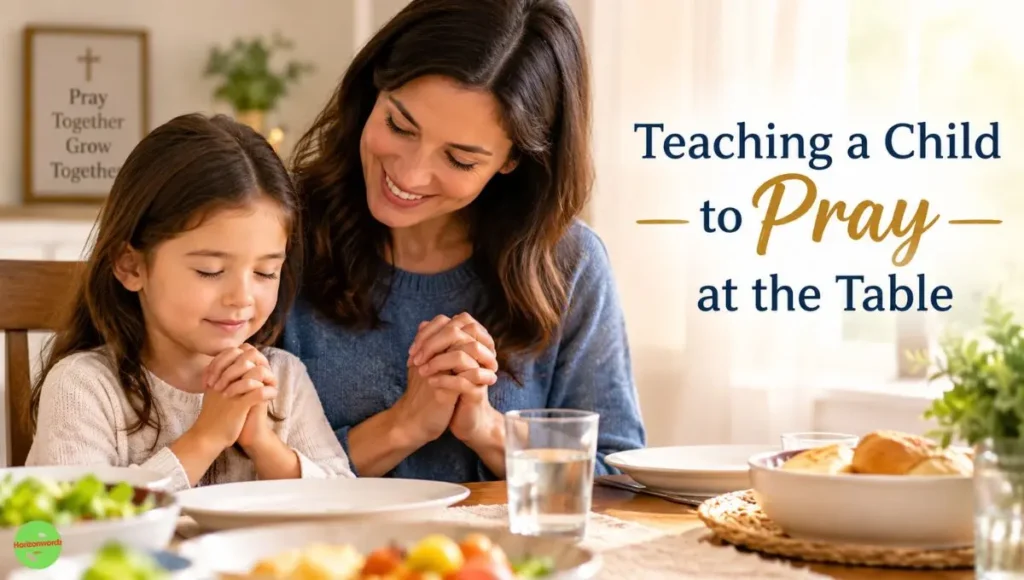
A prayer works best when it fits a routine. These steps suit most households.
Make it the signal that dinner has begun. Pray before anyone picks up a fork. A child who hears the same cue every night soon links the words with sitting, settling and being thankful.
Hold hands, if your family is comfortable with it. It keeps small bodies still, and it quietly teaches that gratitude is shared.
Move beyond the rhyme as the child grows. A four-year-old can recite the verse. A seven-year-old can add one thing they are thankful for. A teenager might say a sentence of their own. The short prayer becomes a doorway to longer ones.
Rotate who prays. A chart on the fridge is not necessary. Just ask, “Whose turn is it tonight?” Siblings often argue over the privilege, which is a good problem to have.
Be flexible when the table is chaotic. Some nights the baby cries or a guest arrives late. A single whispered “God is great, God is good, thank you for our food” still counts.
Don’t Miss: African American Spiritual Friday Blessings: Uplifting Quotes to Share
Four other short table blessings worth knowing
Once your family knows the first prayer well, these four are worth adding.
- The Catholic grace: “Bless us, O Lord, and these Thy gifts, which we are about to receive from Thy bounty, through Christ our Lord. Amen.”
- “Come, Lord Jesus”: “Come, Lord Jesus, be our guest, and let these gifts to us be blessed. Amen.” Many Protestant families use it, and it is easy for children to learn.
- The Doxology: “Praise God from whom all blessings flow; praise Him, all creatures here below; praise Him above, ye heavenly host; praise Father, Son, and Holy Ghost.” The verse was written by Thomas Ken in the 1600s and is often sung before meals.
- A plain thank-you: “For health and strength and daily bread, we praise Thy name, O Lord. Amen.”
Each has a different tone. The first is formal, the second is welcoming, the third is joyful and the fourth is quiet. Keep the God is great God is good prayer for daily use and bring in the others when you want some variety.
Frequently Asked Questions
What are the words to the God is great God is good prayer?
“God is great, God is good, let us thank Him for our food. Amen.” Some families add “By His hands we all are fed, give us Lord our daily bread.”
Who wrote that God is great, God is good prayer?
The author is unknown. It spread through Sunday schools and family tables by word of mouth.
Is the God is great God is good prayer in the Bible?
No, the exact words are not in Scripture. Its message matches passages such as Psalm 145 and Psalm 34:8.
What comes after “let us thank Him for our food”?
Most families end with “Amen.” Some add “By His hands we all are fed, give us Lord our daily bread.”
What age can a child start learning this prayer?
Toddlers as young as two often join in with practice. The short rhyme makes it easy to learn.
Can I say this prayer at times other than meals?
Yes. Many people use “God is great, God is good” as a quick prayer of trust on a hard day.
Conclusion
The God is great God is good prayer lasts because it says two true things plainly: God is powerful, and God is kind.
Its short lines have helped generations of children, and the adults who pray beside them, stop at the table and give thanks.
Choose one meal this week and make it your starting point. Say the words together, explain one line, and let the habit grow from there. A prayer this small can still shape how a family looks at its daily bread.

Danish Ali is a content writer and publisher with 4+ years of experience creating meaningful content for Blessings, Prayers, and Wishes. Through HorizonWordz, he shares original and thoughtful content to inspire, encourage, and bring positivity to readers.